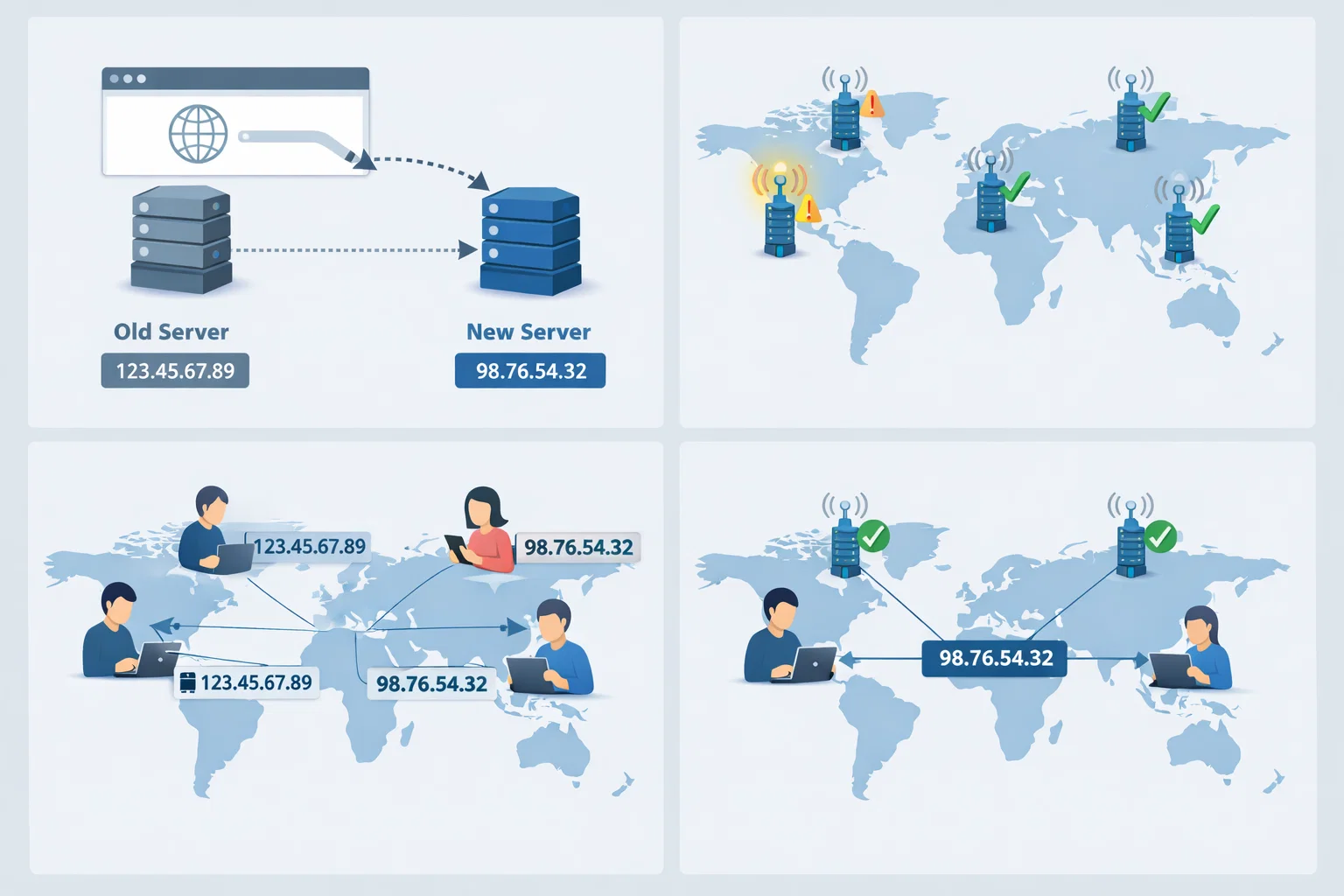
DNS propagation is the process of distributing updated DNS records across DNS servers worldwide. When a domain is pointed to a new server or DNS records are modified, the changes do not become active everywhere at the same time.
During this process, some users may still reach the old server while others access the new one. This delay occurs due to the distributed nature of internet infrastructure.
The Domain Name System (DNS) translates domain names into IP addresses. When a user visits a website, the browser queries DNS servers to find the correct IP address.
DNS servers cache query results for a specific period, which is the primary reason DNS propagation takes time.
After DNS records are updated, internet service providers and local DNS resolvers may continue using cached records until they expire.
This duration is defined by the TTL (Time To Live) value. Once the TTL expires, DNS servers request updated records.
DNS propagation typically completes within a few minutes to 24 hours, but in some cases it may take up to 48 hours.
The duration depends on TTL settings, ISP policies, and regional DNS caching behavior.
After a DNS update, users may experience inconsistent results. The website may load differently across devices or locations.
This is a normal part of the propagation process rather than a system error.
Lowering the TTL value before making DNS changes can help shorten propagation time.
Proper DNS management and reliable hosting infrastructure also help ensure stable updates.
DNS propagation is a natural part of how the internet operates. Waiting for global updates after DNS changes ensures consistent and reliable domain resolution worldwide.

 Turkey (Türkçe)