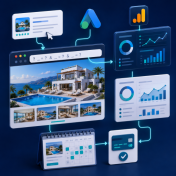
Building a villa rental website is more complex than creating a standard business website. A successful rental platform must combine visual presentation, availability calendars, seasonal pricing, online booking, location management, property features, SEO structure and customer communication in one consistent system.
In competitive holiday regions such as Fethiye, Kaş, Kalkan, Bodrum, Marmaris and Dalyan, users expect more than a gallery and a contact form. They want to check dates, see prices, filter properties, compare options and feel confident that they are dealing with a reliable company.
That is why the first decision is whether the website will only introduce your properties or also support active booking and operational management.
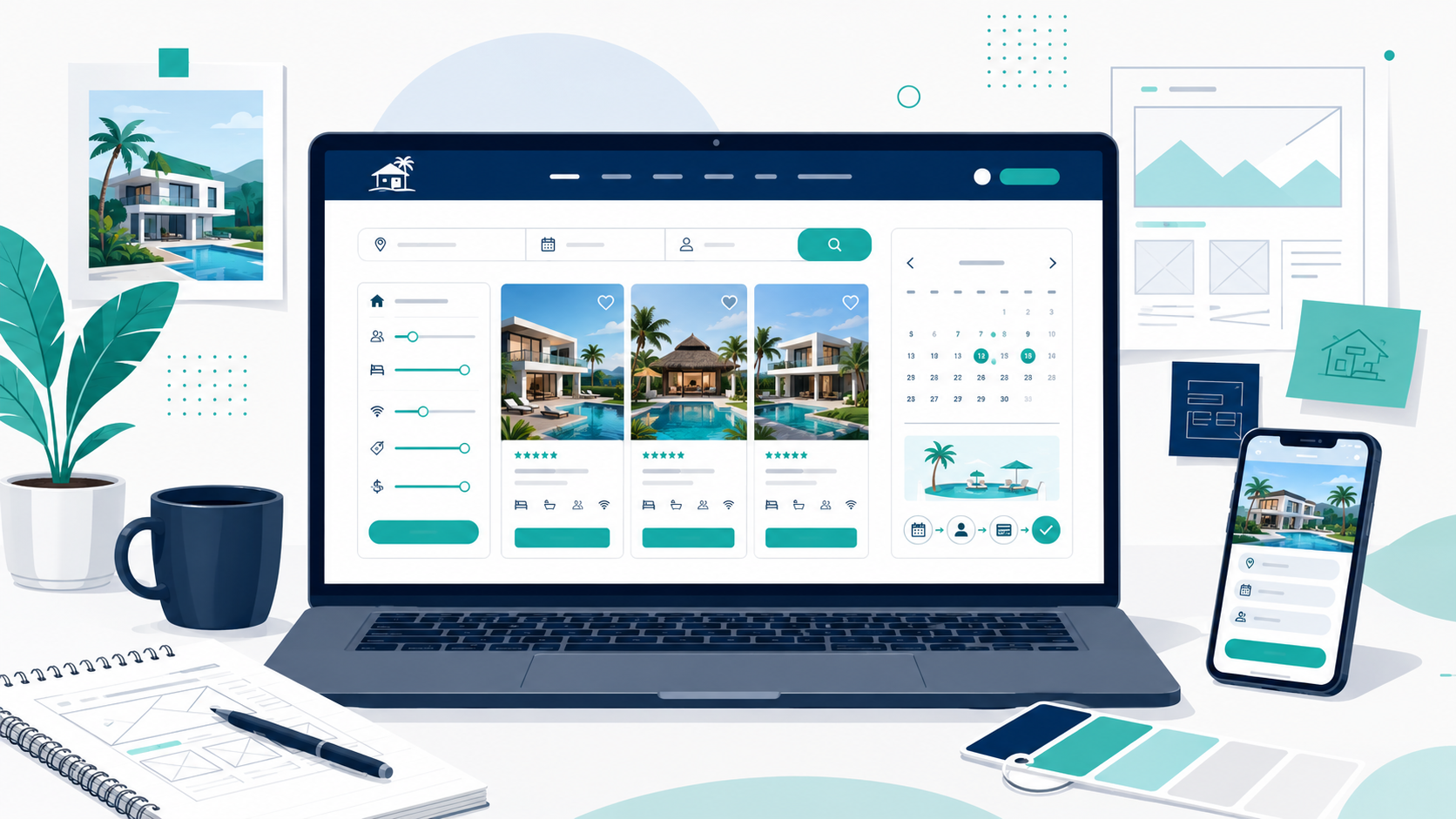
One of the common mistakes in the villa rental industry is evaluating the project only through homepage design and property photos. In reality, a villa rental website must work correctly for users, business teams and search engines at the same time.
For users, the site should be fast, mobile-friendly, easy to navigate and trustworthy. For the business, it should make property management, pricing, photo uploads, booking tracking and calendar control easier. For search engines, it should offer a clean structure for destinations, categories, property pages and blog content.
At this point, using a ready-made villa rental website software can provide a faster starting point than developing everything from scratch. However, the software must match the real needs of the rental business.
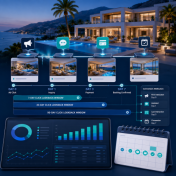
One of the most important elements of a villa rental website is the availability calendar. Visitors want to know whether a property is available for their preferred dates. If the calendar is unclear or outdated, they may quickly move to another website.
A professional system should allow separate availability calendars, minimum stay rules and seasonal booking restrictions for each villa. For example, a company may require five or seven nights during high season while offering more flexible stays in low season.
The booking process should also be more than a simple form. The business should be able to track incoming requests operationally and manage communication with guests, property owners or welcoming staff when needed.
Villa rental prices are rarely fixed throughout the year. High season, low season, holidays, special dates and transitional periods may all require different pricing strategies. Therefore, seasonal pricing should be a core feature of the website infrastructure.
Being able to define separate pricing periods for each property gives the business flexibility. Two villas in the same region may have different nightly rates, minimum stay rules or currency settings. If the software cannot manage these details, manual tracking becomes harder and the risk of errors increases.
The pricing workflow should also be practical. When adding or editing a villa, the team should be able to manage descriptions, photos, pricing periods, property features, location details and other important information in a clear process.
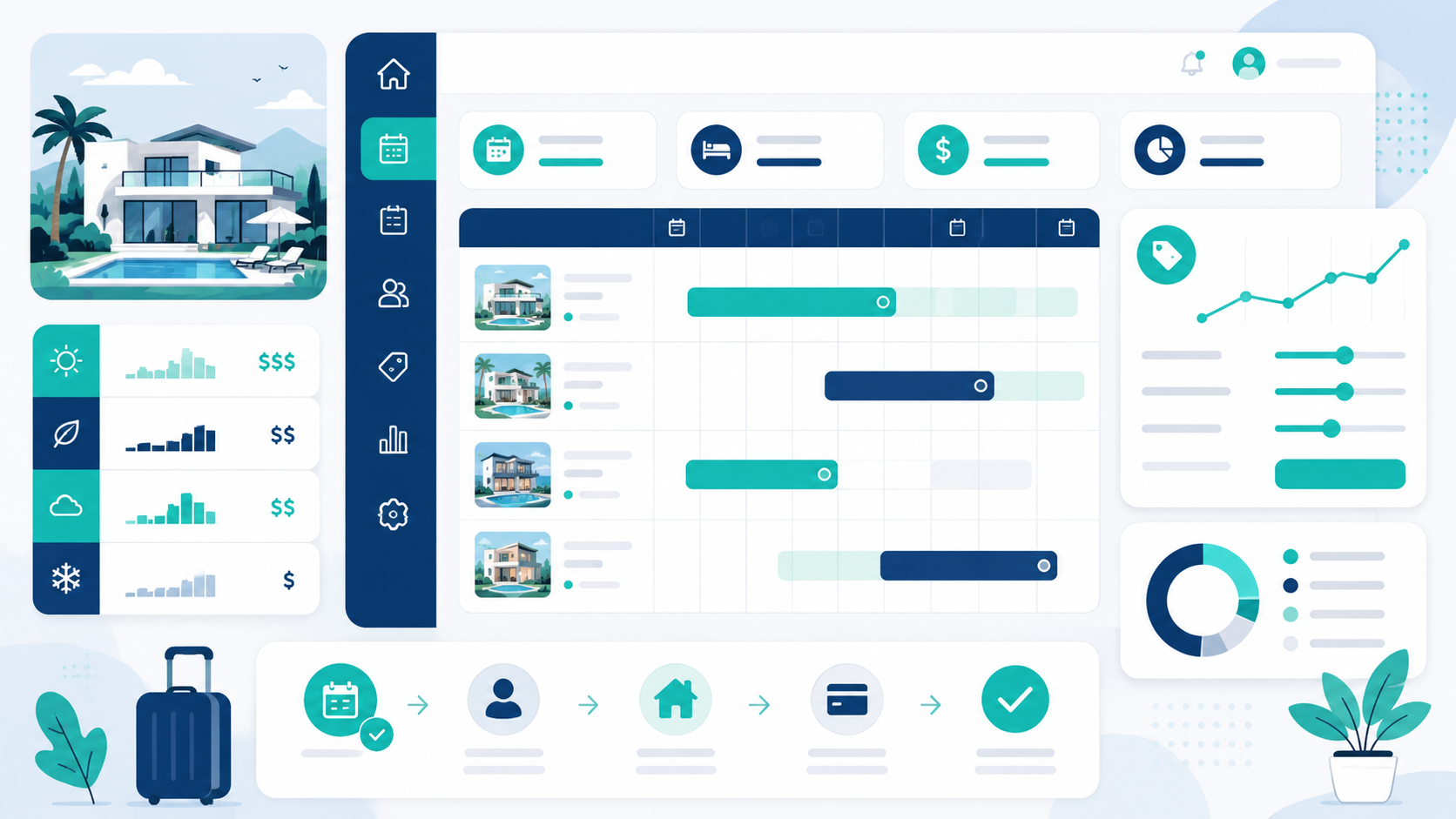
When building a villa rental website, you should not only think about how the site looks today. You should also consider how it will attract traffic from Google in the future. In the tourism industry, organic traffic can help balance advertising costs over time.
A strong SEO structure allows destination pages, category pages, property detail pages and blog articles to be optimized separately. A company targeting searches such as “Kalkan private villa”, “Fethiye heated pool villa” or “sea view villa in Kaş” cannot rely only on the homepage.
This is why content management is important. Static pages, blog articles and category descriptions should be editable with SEO in mind. A technically clean structure also helps search engines understand the purpose of each page more accurately.
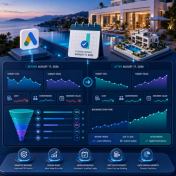
Paid search can also support villa rental marketing, especially at the beginning of the season or for specific destinations. With the right landing pages and campaign structure, Google Ads and digital growth services can help generate demand faster.
Many users search for villas on mobile devices. That means property pages, galleries, filters and booking sections must work smoothly on phones.
Mobile compatibility is not only about fitting the layout into a smaller screen. Buttons should be easy to tap, date selection should be simple, images should load quickly, contact options should be visible and the page should avoid unnecessary complexity.
Speed is also critical. Villa rental websites often include large photo galleries, maps, filters and dynamic content. If the hosting infrastructure is weak, the user experience may suffer. Depending on the size of the project, choosing the right hosting or server solution becomes an important technical decision. For larger traffic or custom software needs, server solutions can provide a stronger performance base.
The villa rental market often targets more than local visitors. In tourism regions, English, German, Russian or other languages may be needed to reach international guests. Multi-language support is therefore not just a translation feature; it is part of international marketing.
Multi-currency support can also improve the user experience. Guests from abroad may prefer to view prices in a currency they understand. This is especially valuable for companies that work with international travelers.
However, multi-language structure should not be implemented carelessly. Each language version should have a proper URL structure, unique content, correct meta information and, where possible, a clean hreflang setup.
Villa rental companies often receive bookings from more than one channel. Reservations may come from their own website, partner agencies or external platforms. In this situation, calendar synchronization becomes extremely important.
iCal support helps synchronize availability data between different platforms. This can reduce the risk of receiving multiple reservations for the same date range. Of course, the setup must be implemented correctly and checked regularly.
Without reliable calendar management, manual tracking during high season can become time-consuming and risky for customer satisfaction.
In villa rental websites, destinations, categories and property features are not only used for filtering. They are also part of the SEO architecture. Pages such as “Ölüdeniz villas”, “Kalkan honeymoon villas” or “Dalyan villas with private pool” can generate long-term organic traffic when supported with useful content.
That is why the management panel should make it easy to organize locations, categories and property features. For each villa, details such as location, pool type, room count, guest capacity, privacy level, distance to the sea and similar information should be entered consistently.
On the content side, duplicate descriptions should be avoided. Every property description, destination page and category text should provide real value to the user.
When building a villa rental website, focusing only on design is not enough. Calendar management, seasonal pricing, bookings, SEO, mobile UX, multi-language support, currency options, iCal and operations should be planned together.
A well-built villa rental website creates trust for visitors and reduces the daily workload for the business. It becomes more than a presentation page; it becomes the center of booking, marketing and operational workflows.
Kariha.net supports tourism-focused digital projects with software, hosting, SEO and advertising solutions. If you are planning to launch a professional villa rental website or improve your existing platform, the right structure can be planned according to your business needs.

 Turkey (Türkçe)