What Is an Encoder?
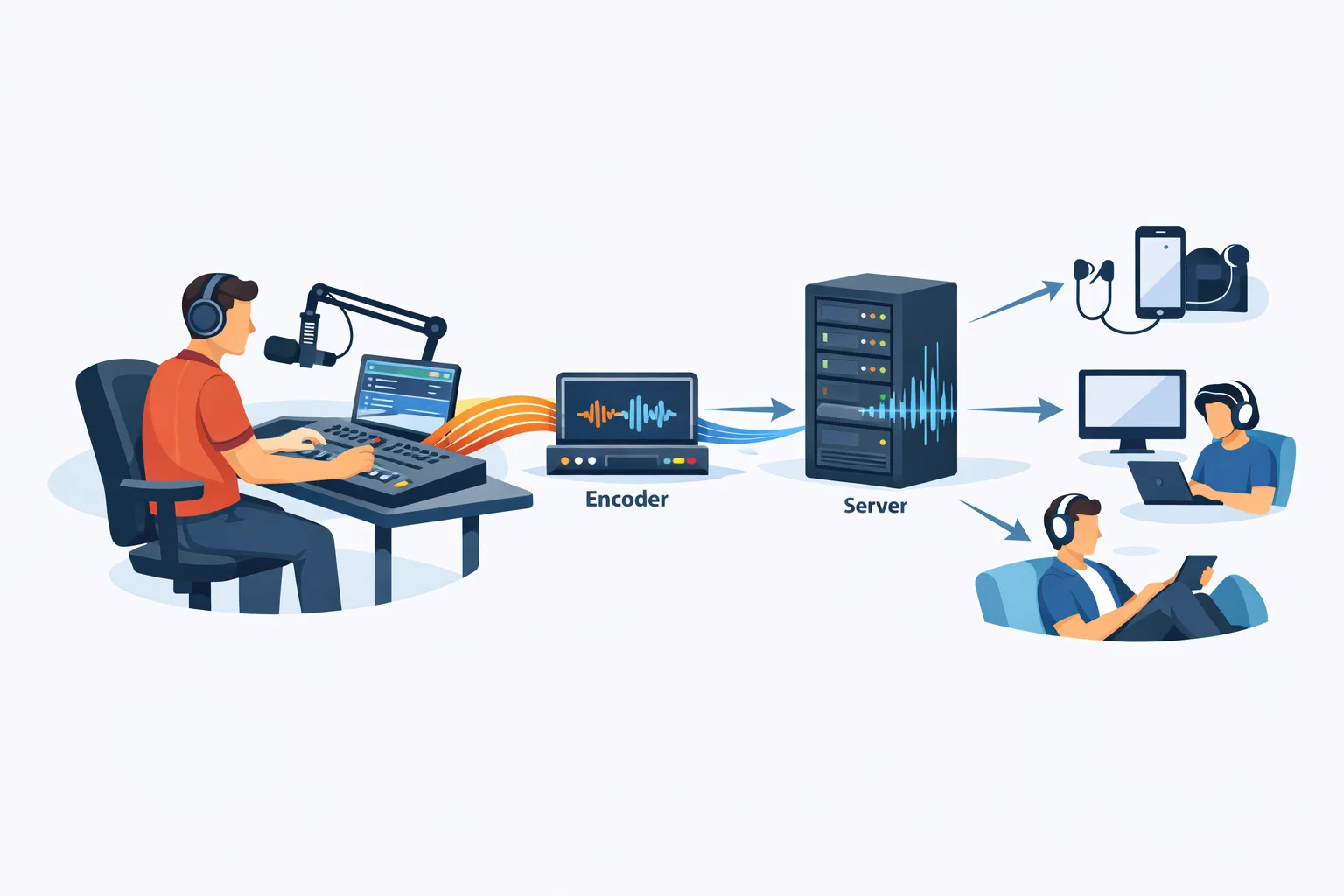
An encoder is a software or hardware tool that sends a live radio broadcast from the broadcaster’s computer to the radio server.
It converts audio input into a digital stream so it can be delivered to listeners in real time.
What Does an Encoder Do?
- Sends live audio to the server
- Encodes sound at a defined bitrate and format
- Allows DJs and hosts to go live
- Enables real-time broadcasting
Can You Broadcast Live Without an Encoder?
No. An encoder is required for live broadcasting.
Without an encoder, only AutoDJ or server-based automated streams can operate.
How Does an Encoder Work?
The encoder captures audio input and converts it into formats such as MP3 or AAC.
This stream is sent to the configured mount point on the radio hosting server.
Common Encoder Settings
- Bitrate (96 kbps, 128 kbps, etc.)
- Audio format (MP3 / AAC)
- Server address and port
- Mount point and password
Common Mistakes
- Using an incorrect mount point
- Entering wrong server credentials
- Selecting a bitrate above server limits
- Losing internet connection during broadcast
Best Practices
- Test encoder settings before going live
- Match bitrate with hosting plan limits
- Enable fallback during live broadcasts
- Monitor encoder logs for disconnections
From a knowledge base perspective, the encoder is the origin point of live broadcasting in radio hosting systems.

 Turkey (Türkçe)