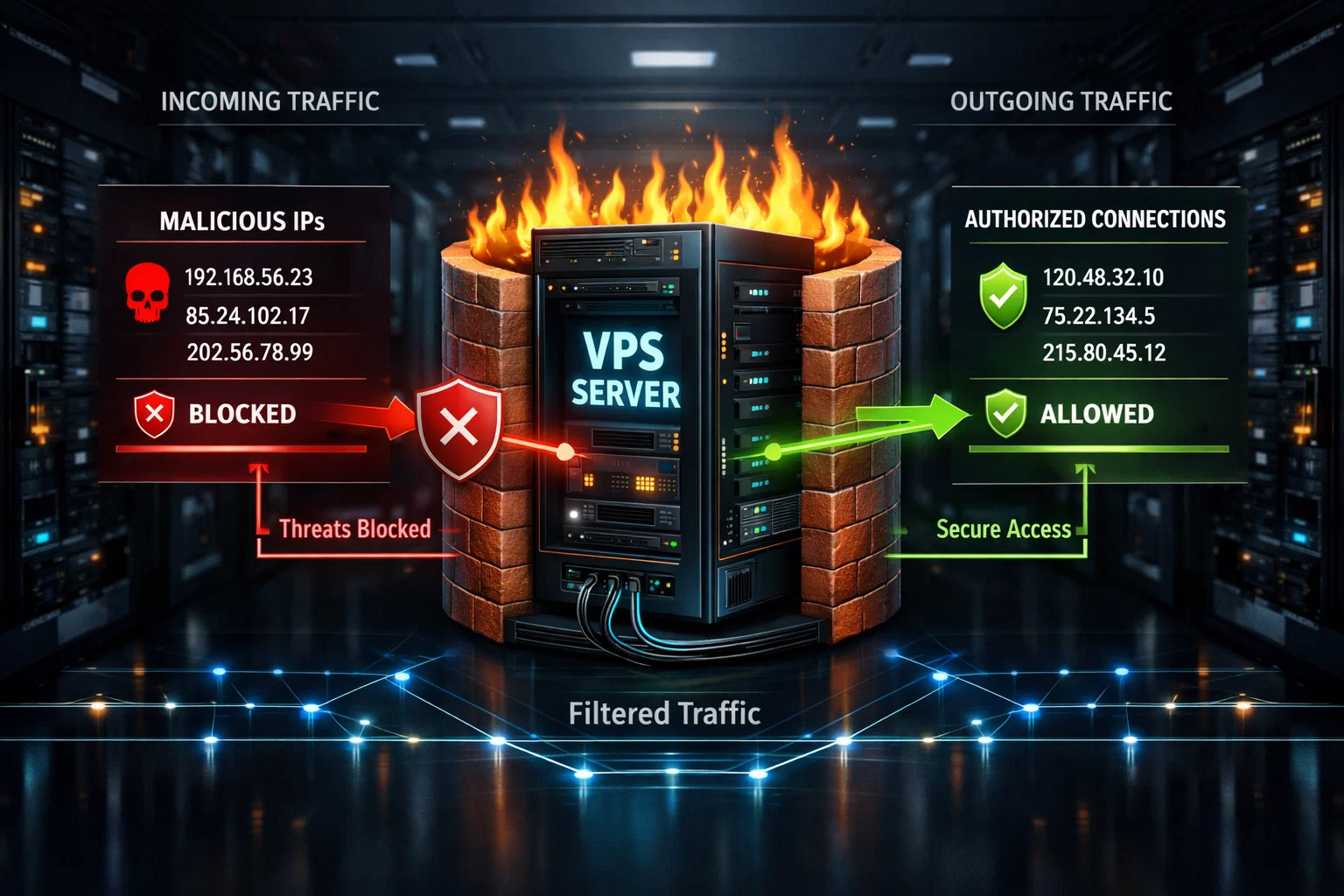
A firewall is a security system that monitors and controls incoming and outgoing network traffic. On VPS servers, firewalls are essential for preventing unauthorized access and protecting system resources.
What Does a Firewall Do?
- Blocks unauthorized IP addresses
- Ensures only required ports remain open
- Limits brute force and port scanning attacks
- Prevents abuse of server resources
Types of Firewalls on VPS Servers
- Software Firewall: Runs on the server OS (e.g., UFW, CSF).
- Network Firewall: Filters traffic before it reaches the server.
Risks of Running a VPS Without a Firewall
- Exposure through open ports
- Unauthorized SSH login attempts
- Performance degradation due to malicious traffic
- Data breaches and service downtime
Firewall Configuration Best Practices
- Keep only necessary ports open
- Restrict SSH access by IP whenever possible
- Incorrect rules may block server access entirely
Why VPS Security Requires Extra Attention
Since VPS servers offer dedicated resources, all security responsibility lies with the user. Firewall configuration is one of the most critical steps. A secure VPS server infrastructure helps reduce risks.
Conclusion
A firewall is the locked door of your VPS server. Running a server without proper firewall protection exposes it to serious security threats.

 Turkey (Türkçe)