What Are Concurrent Listeners?
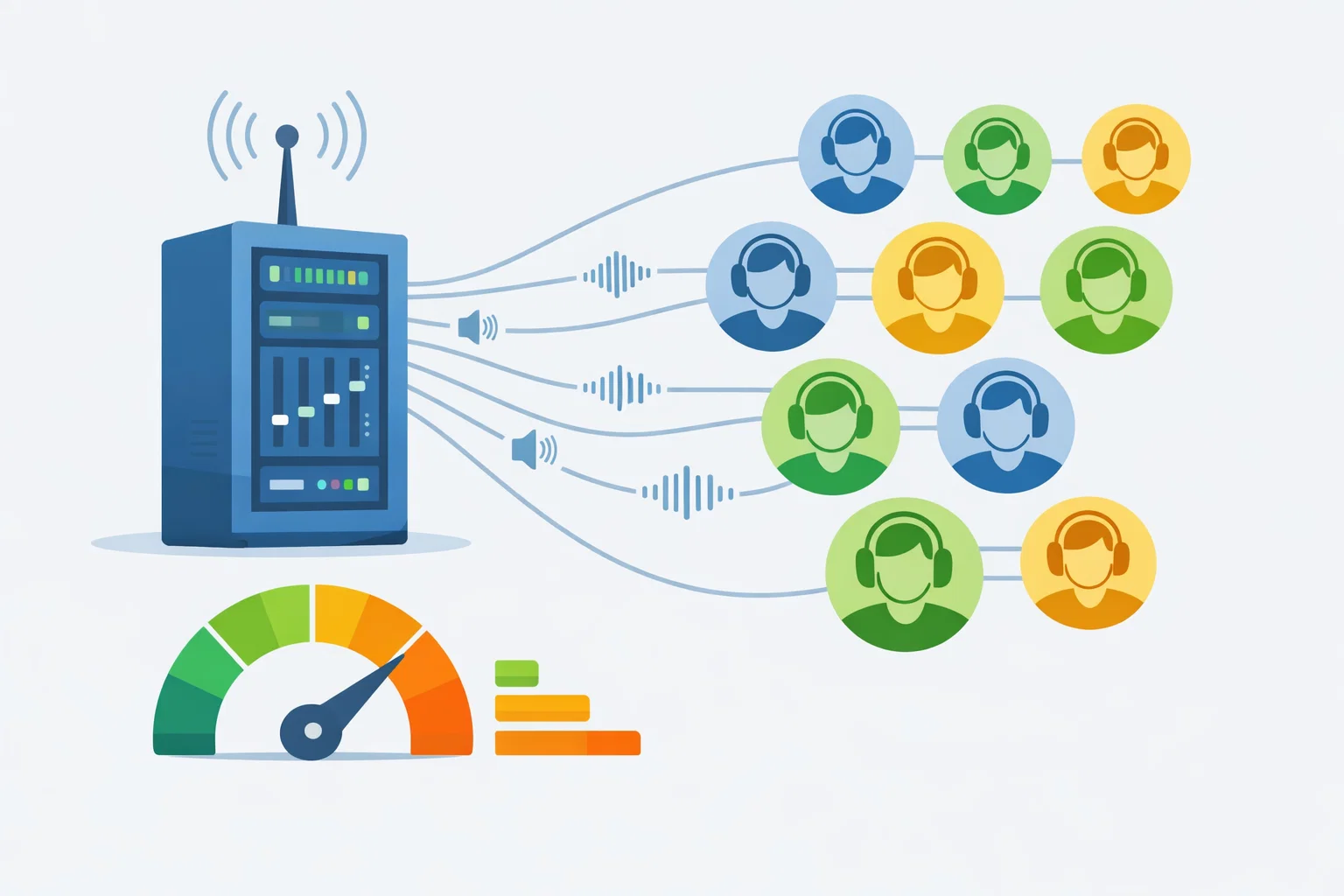
Concurrent listeners refer to the maximum number of users who can listen to a radio broadcast at the same time.
In radio hosting plans, this value defines how many listeners the server can handle simultaneously.
What Is the Listener Limit Used For?
- Limits server capacity
- Maintains broadcast performance
- Balances bandwidth usage
- Prevents server overload
What Happens When the Listener Limit Is Reached?
- New listeners cannot connect
- Players return connection errors
- Existing listeners remain connected
- Audience growth is blocked
How Is Listener Capacity Calculated?
Listener capacity is directly related to the broadcast bitrate.
- 96 kbps stream × 100 listeners ≈ 9.6 Mbps
- 128 kbps stream × 100 listeners ≈ 12.8 Mbps
Higher listener counts require proportionally more bandwidth.
Common Mistakes
- Expecting high traffic on low-tier plans
- Ignoring the bitrate–listener relationship
- Not analyzing peak listening hours
- Lack of alerts when limits are reached
Best Practices
- Set realistic audience targets
- Monitor peak usage via logs
- Review listener limits regularly
- Plan upgrades as the station grows
From a knowledge base perspective, concurrent listener limits are a core indicator of scalability in radio hosting infrastructure.

 Turkey (Türkçe)