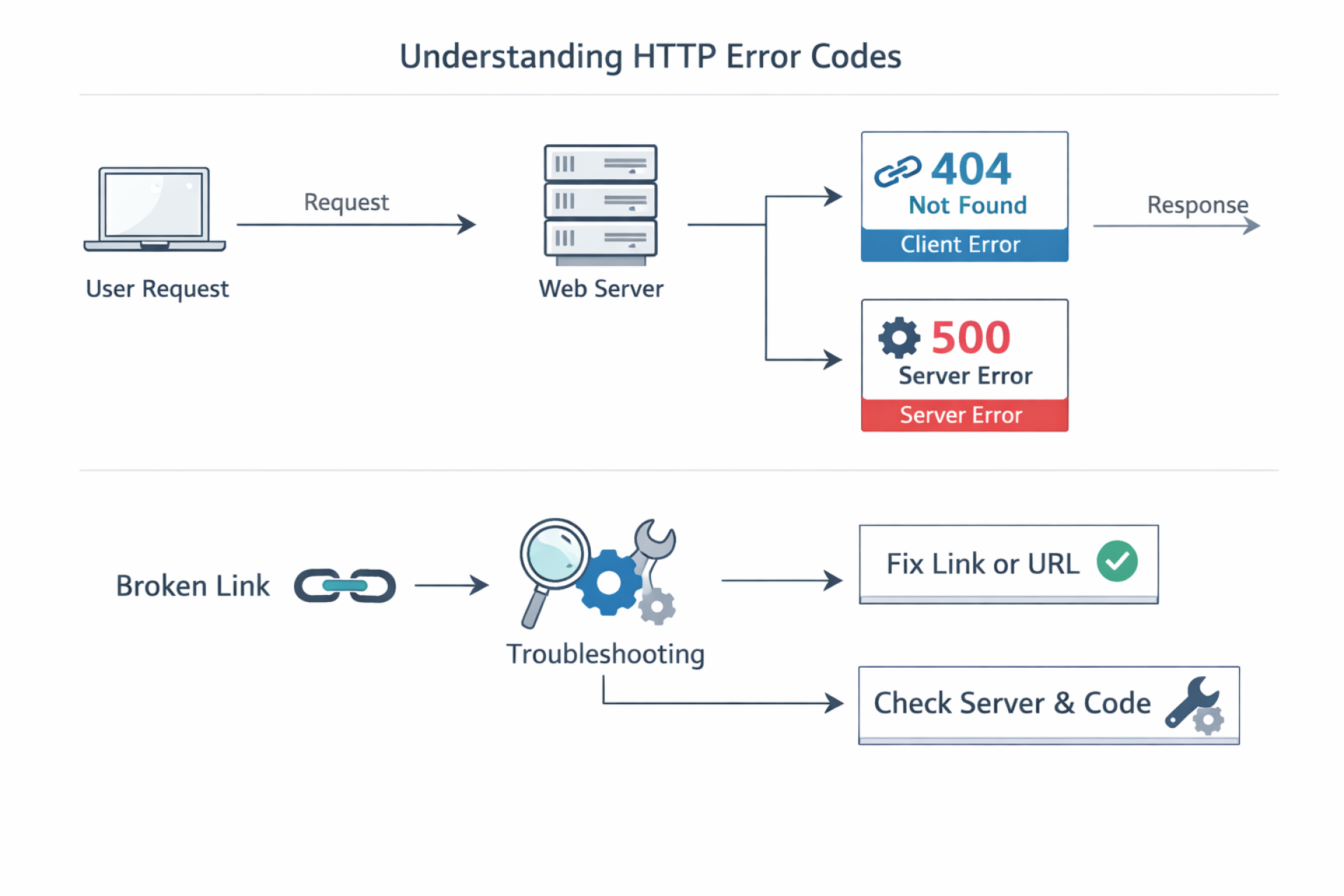
HTTP status codes indicate how a web server responds to a browser request. Among the most common errors are 404 and 500.
What Is a 404 Not Found Error?
A 404 error means the requested page does not exist on the server. It usually occurs due to removed pages or incorrect URLs.
Common Causes of 404 Errors
- Incorrect or mistyped URLs
- Deleted pages
- Broken internal or external links
- Improper redirects
What Is a 500 Internal Server Error?
A 500 error indicates that the server encountered an unexpected condition while processing the request.
Common Causes of 500 Errors
- Server misconfiguration
- Application or theme errors
- Corrupted .htaccess file
- Insufficient server resources
Difference Between 404 and 500 Errors
- 404: Page missing, server is reachable
- 500: Server cannot process the request
How to Fix These Errors
- For 404: Check URLs and add redirects
- For 500: Review server logs and configuration
Conclusion
404 and 500 errors represent different problems and require different solutions. Correct diagnosis is essential for uptime and SEO.

 Turkey (Türkçe)